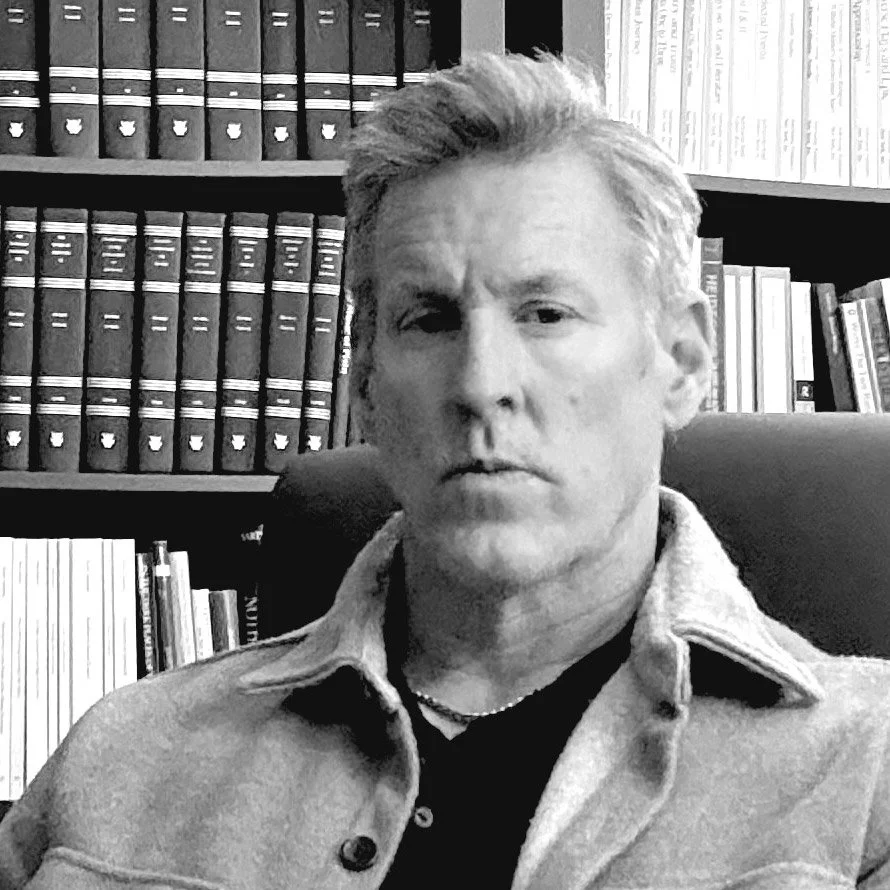
IAN C. EDWARDS

Ian C. Edwards, PhD., 2025.

Placeholder Picture for the forthcoming title, Black Tide: Occult Reflections on C.G. Jung’s “The Red Book”

Dr. Edwards is a licensed psychologist and the author of “Being and Non-Being in Occult Experience” series of books (Volume I-IV, 2022-2024), published by Atramentous Press. He is also the author of “The Divine Hearth and Radical Hospitality” which appeared in PILLARS: A Wayfarer’s Heart (Vol. 2, Issue 3, 2022), as well as A Druid in Psychologist’s Clothing: E. Graham Howe’s Secret Druidic Doctrine (2023), both published by Anathema Publishing Ltd.)

Dr. Edwards is also the Assistant Vice President of Student Wellbeing at Duquesne University. He describes his approach as “dialectical non-dualism,” where he infuses the act of writing with method and content, through a spiritual phenomenology that attempts to inscribe the sacred as a self-referential embrace that reconciles the psycho-spiritual spaces in which dualities and oppositions such as being and non-being, good and evil, self and other, are made manifest.

Dr. Edwards reads occult texts using a method that combines grammatology with a participatory epistemology that explores and describes ontologies of deific forms.

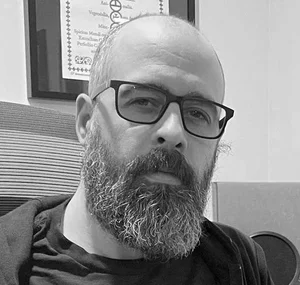
G. McCaughry

Gabriel McCaughry is a scholar-practitioner of the Mystery Traditions, with sustained research interests in Spiritual Alchemy, Hermeticism, Gnosticism, theological exegesis, non-dual metaphysics, esoteric Buddhist systems, and traditional craft lineages. His work is informed by a devotional praxis oriented toward what he terms the Omni-Cipher—the ineffable ground and manifold radiance of the Pleroma. He is the founder and CEO of Anathema Publishing Ltd. and FOUNT Ultd., publishing houses dedicated to rigorous esoteric, philosophical, and initiatory works.

His first book, (h)Auroræ (Anathema Publishing Ltd., 2018), presents an initiatory framework for Alchemical self-transmutation, approached less through doctrinal exposition than through poetic inference and symbolic density. The text seeks to gesture toward modes of knowing that exceed discursive language, inviting the reader into a contemplative engagement with paradox, polysemy, and the interior logic of the Great Work. Rather than prescribing conclusions, (h)Auroræ functions as a catalyst—an intellectual and spiritual crucible through which the attentive reader may apprehend their own process of transformation.

https://www.anathemapublishing.com
Previous
Previous

M. DAVID LITWA

Next
Next

JOSÉ GABRIEL ALEGRÍA SABOGAL