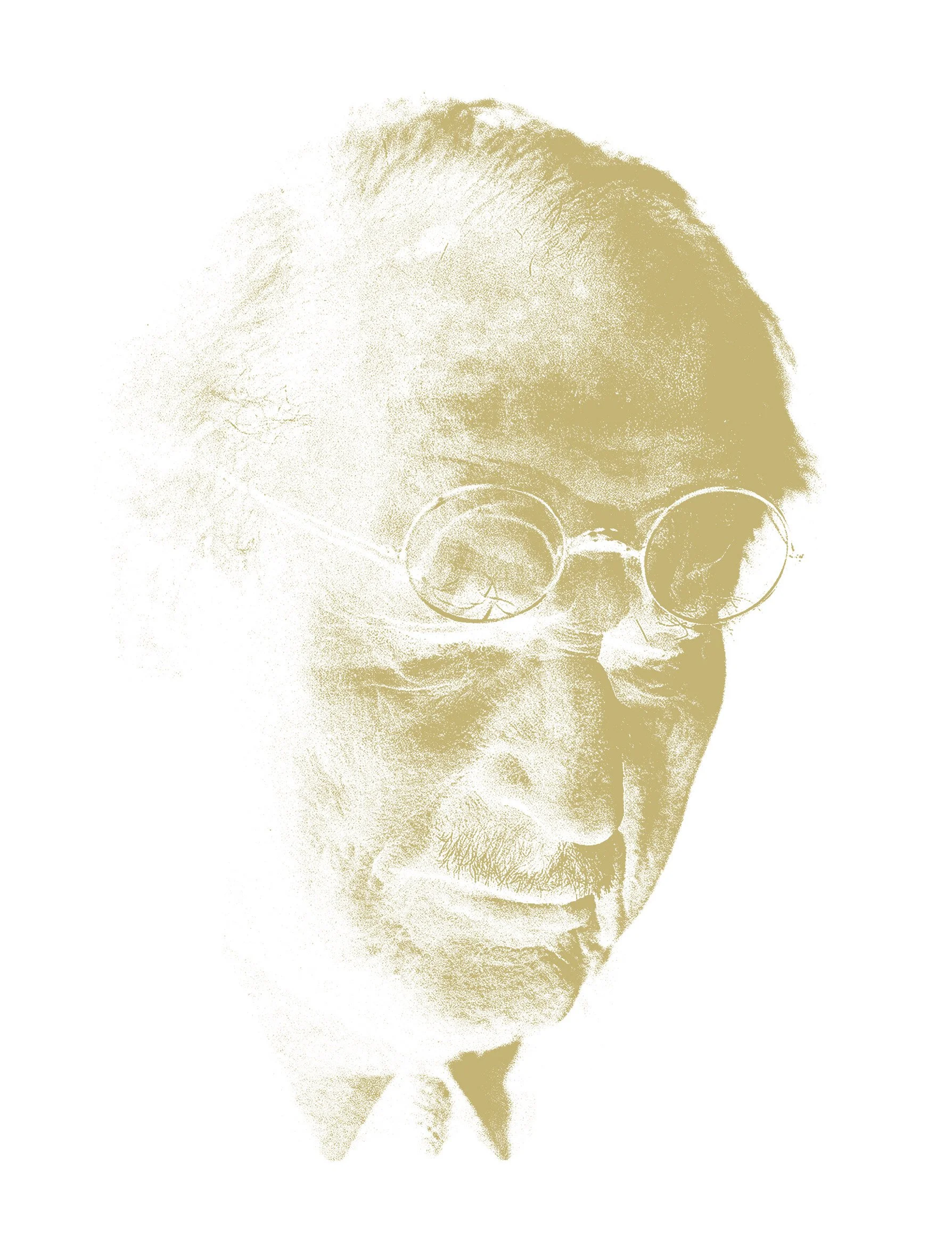
Black Tide (Forthcoming)

from $50.00

FORTHCOMING: TBD

Black Tide: Occult Reflections on C.G. Jung’s The Red Book

Edited by Ian C. Edwards

Fount Ultd.

During his “confrontation with the unconscious,” C.G. Jung produced The Red Book (Liber Novus)—a visionary manuscript of dreams, dialogues, and mythopoetic images that would become foundational to analytical psychology. Though withheld from publication during his lifetime, this seminal work reveals Jung’s profound engagement with esoteric currents that Freud once dismissed as the “black tide of mud (…) of occultism.”

Black Tide explores these hidden influences and their transformative role in Jung’s psychology. This volume brings together leading academics, independent researchers, and contemporary practitioners of Hermeticism, alchemy, Gnosticism, theurgy, Kabbalah, astrology, and related occult traditions. Through rigorous essays, experiential reflections, and striking visual art, contributors examine how Jung’s visionary encounters gave rise to a new God-image—ophidian, Abraxian, and radically transformative—and how these insights continue to resonate across psychoanalytic, philosophical, and esoteric discourses.

By breaching the Freudian bulwark against occultism, Black Tide reveals the richness of the mystical foundations underlying depth psychology. This interdisciplinary tome invites dialogue between scholarship and practice, offering fresh perspectives on Jung’s Liber Novus and its enduring significance for psychology, spirituality, and the Western esoteric imagination.

(...)

Edition:

FORTHCOMING: TBD

Black Tide: Occult Reflections on C.G. Jung’s The Red Book

Edited by Ian C. Edwards

Fount Ultd.

During his “confrontation with the unconscious,” C.G. Jung produced The Red Book (Liber Novus)—a visionary manuscript of dreams, dialogues, and mythopoetic images that would become foundational to analytical psychology. Though withheld from publication during his lifetime, this seminal work reveals Jung’s profound engagement with esoteric currents that Freud once dismissed as the “black tide of mud (…) of occultism.”

Black Tide explores these hidden influences and their transformative role in Jung’s psychology. This volume brings together leading academics, independent researchers, and contemporary practitioners of Hermeticism, alchemy, Gnosticism, theurgy, Kabbalah, astrology, and related occult traditions. Through rigorous essays, experiential reflections, and striking visual art, contributors examine how Jung’s visionary encounters gave rise to a new God-image—ophidian, Abraxian, and radically transformative—and how these insights continue to resonate across psychoanalytic, philosophical, and esoteric discourses.

By breaching the Freudian bulwark against occultism, Black Tide reveals the richness of the mystical foundations underlying depth psychology. This interdisciplinary tome invites dialogue between scholarship and practice, offering fresh perspectives on Jung’s Liber Novus and its enduring significance for psychology, spirituality, and the Western esoteric imagination.

(...)

  • 6 x 9 in. | illustrated | colour | 324 pp.

    ISBN: 978-1-989339-27-5

  • 6 x 9 in. | illustrated | colour | 324 pp.

    Limited to 500 copies | ISBN: 978-1-989339-27-5

CONTENTS 

[TBA]

ABOUT THE EDITOR

Ian C. Edwards, PhD.

Dr. Edwards is a licensed psychologist and the author of “Being and Non-Being in Occult Experience” series of books (Volume I-IV, 2022-2024), published by Atramentous Press. He is also the author of “The Divine Hearth and Radical Hospitality” which appeared in PILLARS: A Wayfarer’s Heart (Vol. 2, Issue 3, 2022), as well as A Druid in Psychologist’s Clothing: E. Graham Howe’s Secret Druidic Doctrine (2023), both published by Anathema Publishing Ltd.)

Dr. Edwards is also the Assistant Vice President of Student Wellbeing at Duquesne University. He describes his approach as “dialectical non-dualism,” where he infuses the act of writing with method and content, through a spiritual phenomenology that attempts to inscribe the sacred as a self-referential embrace that reconciles the psycho-spiritual spaces in which dualities and oppositions such as being and non-being, good and evil, self and other, are made manifest.

Dr. Edwards reads occult texts using a method that combines grammatology with a participatory epistemology that explores and describes ontologies of deific forms.